
Your basket is currently empty!

AI in Digital Marketing 2026: A Practical Guide for UK Brands
AI in Digital Marketing 2026: A Practical Guide for UK Brands
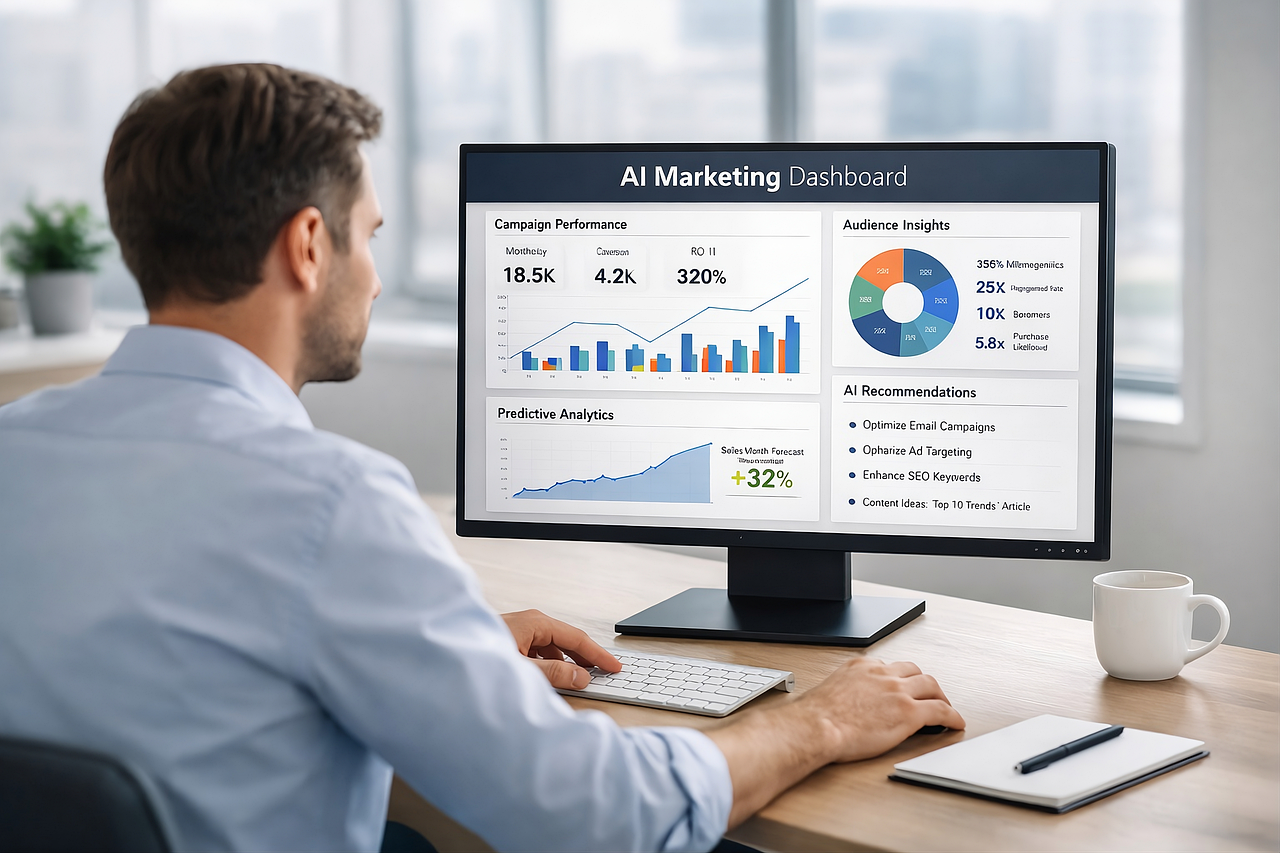
Digital marketing has changed rapidly over the past few years, and artificial intelligence is at the heart of that change. From content creation and ad targeting to customer data analysis and social media planning, many processes are now managed with AI-powered tools. So what does AI in digital marketing really mean, and how can your brand benefit? In this guide we look at how UK businesses can bring AI into their marketing strategy in 2026.
How Is AI Transforming Digital Marketing?
AI allows brands to analyse customer behaviour more quickly, deliver personalised experiences and optimise campaign performance almost in real time. Analysis that once took weeks can be completed in minutes, which helps marketing teams make strategic decisions faster. For small and medium-sized businesses, this puts the data power of a large digital marketing agency within reach at a more affordable cost.
Using AI for Content Creation
Content marketing is one of the areas where AI is most useful. Drafting blog outlines, generating ideas for social media posts, writing product descriptions or turning existing content into new formats is far quicker than it used to be. There is an important caveat: AI tools give you a starting point, but human editors decide the final quality, tone of voice and accuracy. At Kinka Medya we use AI as an efficiency tool, and every piece of content is reviewed by an editor so that it stays true to your brand.
AI in Advertising and Audience Targeting
Platforms such as Google Ads and Meta Ads rely heavily on AI to optimise campaigns. Automated bidding, dynamic ad copy and smart audience suggestions help your advertising budget go further. These algorithms study past performance, predict which segments are most likely to convert and direct spend accordingly. Even so, a successful strategy combines automation with a well-defined audience and clear campaign objectives.
What to Consider When Using AI
- Accuracy and originality: always check AI-generated content, as it can produce mistakes or misleading information.
- Data protection: process customer data in line with UK GDPR and your own privacy policy.
- Human judgement: AI is a tool and cannot replace your strategic vision, creativity or genuine relationship with customers.
Brands that find the right balance between technology and human oversight are the ones that stay ahead of their competitors.
Which AI Tools Stand Out for Marketers?
The range of AI tools used by marketing teams every day keeps growing. Language models support copywriting and content planning, generative design tools produce images and video, and chatbots handle customer service. Web analytics platforms also use AI models to show which pages improve conversions and which content fails to keep visitors engaged. In e-commerce, recommendation engines personalise the shopping experience based on past behaviour and can lift average basket value.
What these tools share is that they do not remove people from the process. They automate repetitive, time-consuming tasks so marketers can spend more time on strategy and creative work. The right choice depends on your size, sector and goals, so working with a digital marketing agency can help you decide which technologies will genuinely add value.
Getting Started with AI in Digital Marketing: A Sensible Order of Work
Teams that see value from AI in digital marketing usually begin small and build on what works, rather than changing every process at once.
- Choose a single use case. Good candidates are first drafts of copy, reporting summaries or sorting enquiries.
- Agree what success looks like. Note current time spent and current performance before you introduce any tool.
- Put an editor in the loop. A person should review each output for accuracy, tone and compliance with UK advertising rules.
- Review regularly. After a few weeks, decide what to keep, adjust or abandon.
Pitfalls Worth Knowing About
- Relying on unchecked output, which can contain errors or generic wording.
- Sharing customer data with tools before reading their data-protection terms.
- Judging success by volume of content rather than by results.
Frequently Asked Questions
Can AI replace a marketing team?
No. AI speeds up routine tasks and analysis, but strategy, creativity and brand judgement still need people.
Is AI marketing only for big companies?
Not at all. Many AI features are already built into tools smaller businesses use, such as ad platforms and analytics.
Where should a small business begin?
Choose one clear use case, such as drafting content or optimising ads, measure the results and build from there.
Conclusion
AI in digital marketing offers a real competitive edge when it is paired with the right strategy. Through our service packages, Kinka Medya combines SEO, social media marketing, digital advertising and content marketing with current technology to deliver sustainable growth for our clients.
Ready to put AI to work for your brand? Meet the Kinka Medya team or email us at info@kinka.com.tr to plan a strategy that fits your goals.
If you would like support organising AI within your marketing, please get in touch via our contact page.



Leave a Reply