
Your cart is currently empty!

AI Marketing in 2026: A Practical Guide for Brands
AI Marketing in 2026: A Practical Guide for Brands
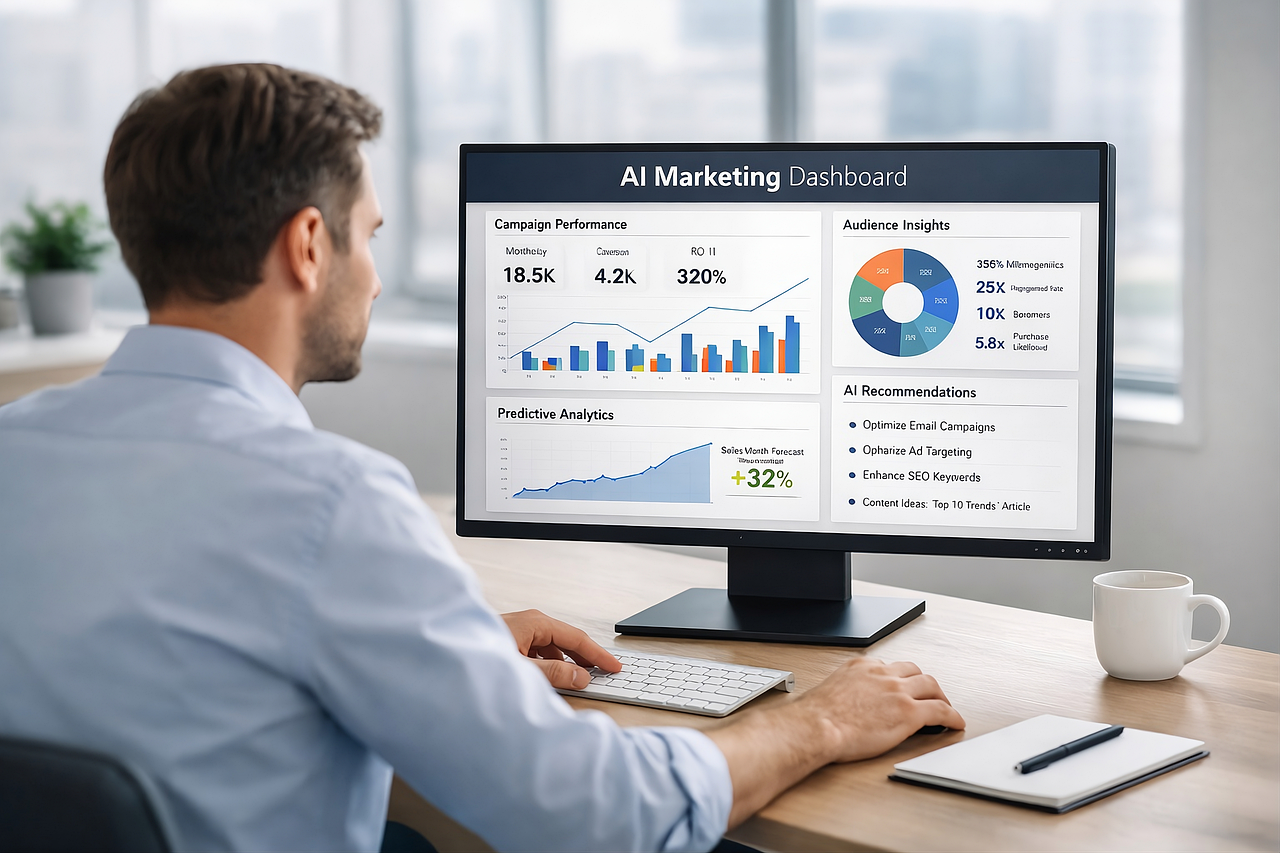
Digital marketing has changed quickly over the past few years, and artificial intelligence sits at the center of that shift. From content creation and ad targeting to customer data analysis and social media planning, more and more tasks are now handled with AI-powered tools. So what does AI marketing actually mean, and how can your brand benefit? This guide shows how businesses can fold AI into their marketing strategy in 2026.
How Is AI Changing Marketing?
AI marketing lets brands analyze customer behavior faster, deliver more personalized experiences and optimize campaign performance in near real time. Analysis that once took weeks can now be finished in minutes, so marketing teams make strategic decisions sooner. For small and mid-size businesses, that means access to the kind of data muscle a large marketing agency has always had, at a far more accessible cost.
How to Use AI for Content Creation
Content marketing is one of the areas where AI helps the most. Drafting blog outlines, brainstorming social posts, writing product descriptions or repurposing existing content into new formats is much faster than before. There is one important catch: AI tools give you a starting point, while human editors decide the final quality, brand voice and accuracy. At Kinka Medya we use AI as an efficiency tool and review every piece of content through a human editor so it sounds like your brand.
AI in Advertising and Targeting
Platforms such as Google Ads and Meta Ads now rely heavily on AI to optimize campaigns. Automated bidding, dynamic ad copy and smart audience suggestions help advertising budgets work harder. These algorithms study past performance, predict which audience segments are most likely to convert and shift spend accordingly. Still, a successful ad strategy needs automation paired with a clear audience definition and well-defined campaign goals.
What to Watch Out for When Using AI
- Accuracy and originality: always check AI-generated content. AI can produce errors or misleading claims.
- Privacy and data security: handle customer data in line with applicable privacy laws and your own policies.
- Human judgment: AI is a tool. It cannot replace your strategic vision, creativity or authentic connection with customers.
Brands that strike the right balance between technology and human oversight are the ones that pull ahead of competitors.
Which AI Tools Stand Out in Marketing?
The range of AI tools marketing teams use every day keeps growing. Language models support copywriting and content planning, generative design tools handle images and video, and chatbots take on customer service. Web analytics platforms also use AI models to show which pages lift conversions and which content fails to keep visitors. In e-commerce, recommendation engines personalize the shopping experience based on past behavior and can raise average order value.
What these tools have in common is that they do not remove human effort. They automate repetitive, time-consuming tasks so marketers can spend more time on strategy and creative work. The right choice depends on your company size, industry and goals, which is why working with a marketing agency helps you decide which technologies will really add value.
A Practical Starting Plan for AI Marketing
The most common mistake in AI marketing is buying tools before defining the problem. A short, structured start keeps the effort focused and measurable.
- Pick one process. Choose a repetitive task such as drafting email subject lines, summarizing reports or grouping customer feedback.
- Set a baseline. Record how long the task takes today and how the results perform, so you can compare later.
- Keep a human reviewer. Every output should be checked for accuracy, brand voice and legal fit before it is published.
- Review after a month. Keep what saves time or improves results, and drop what does not.
Common Mistakes to Avoid
- Publishing generated text without editing or fact-checking it.
- Feeding customer personal data into tools without checking privacy terms.
- Measuring activity (how much was produced) instead of outcomes.
Frequently Asked Questions
Can AI replace a marketing team?
No. AI speeds up routine work and analysis, but strategy, creativity and brand judgment still need people.
Is AI marketing only for large companies?
Not at all. Many AI features are built into tools small businesses already use, such as ad platforms and analytics.
Where should a small business start?
Start with one clear use case, such as content drafts or ad optimization, measure the results and expand from there.
Conclusion
AI-driven marketing is a real competitive advantage when it is paired with the right strategy. Through our service packages, Kinka Medya combines SEO, social media management, digital advertising and content marketing with current technology to build sustainable growth for our clients.
Ready to put AI to work for your brand? Meet the Kinka Medya team or email us at info@kinka.com.tr to plan a strategy that fits your goals.
Want help applying AI in your own marketing plan? Talk to the Kinka team through our contact page.


Leave a Reply